
Funding will help colleges strengthen student recruitment and employer partnerships as the industry confronts a growing shortage of skilled technicians.
Nov. 12, 2026 — The GEICO Philanthropic Foundation has awarded a US$100,000 grant to the Collision Engineering Career Alliance to expand recruitment and training opportunities for the next generation of collision repair technicians.
The funding will help participating colleges develop standardized recruitment programs, strengthen relationships with collision repair employers, and introduce more students to careers in the automotive repair industry.
The initiative comes as the U.S. collision repair sector faces a significant workforce challenge. According to figures cited from the U.S. Bureau of Labor Statistics and the TechForce Foundation, the industry is projected to have approximately 14,600 annual openings for collision repair technicians through 2034, while existing training programs supply only 42 per cent of that demand.
The Collision Engineering program combines a two-year associate degree with paid, hands-on apprenticeships at participating collision repair facilities. The approach gives students classroom instruction and practical shop experience while providing employers with access to developing technicians.
The GEICO Foundation’s contribution will support a national recruitment framework, training for college recruiters and high school counsellors, employer marketing resources, quarterly educational webinars, and campus recruitment events.
“By donating to Collision Engineering, we’re opening doors for the next generation of technicians and helping address a workforce shortage that affects drivers, repair shops, and insurers alike,” said Alan Durand, a GEICO Philanthropic Foundation board member and head of associate experience at GEICO.
Mary Mahoney, president of the Collision Engineering Career Alliance, said the funding will provide participating colleges with additional resources to recruit students, engage employers, and expand the program.
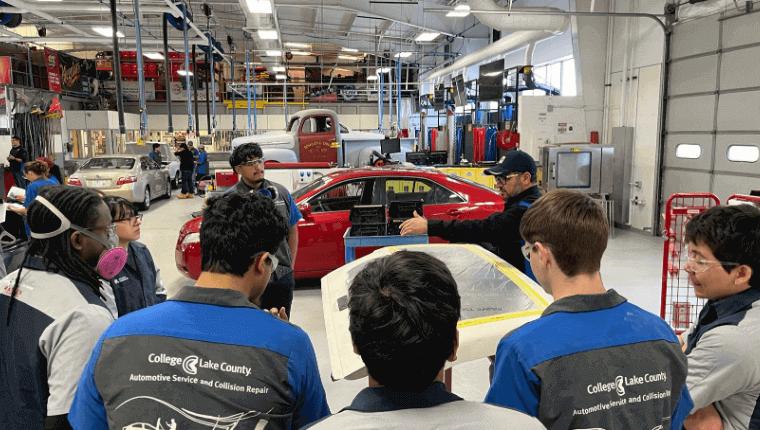
The initiative currently involves seven partner colleges across the United States, including Contra Costa College in California, College of Lake County in Illinois, and Metropolitan Community College in Nebraska.
For Canadian collision repair facilities, the announcement offers an interesting example of how insurers can contribute directly to workforce development rather than relying solely on traditional recruitment and apprenticeship pathways.
Canada faces similar challenges attracting and retaining qualified technicians, particularly as increasingly complex vehicle construction, electronics, and advanced driver assistance systems place additional demands on the workforce.
The GEICO-supported model could provide ideas for Canadian insurers, repair networks, colleges, and industry associations looking to strengthen connections between education and employment.